 Request Your Machine Service & Repair Online



If you would like to learn more about Springpack and our services, use the form below to submit an enquiry, or get in touch with one of our packaging experts by…
A Simple Guide to EPR
A Simple Guide to EPR
Learn what Extended Producer Responsibility (EPR) is, who it affects and how it changes packaging responsibilities for UK businesses. A simple guide from Springpack.
If you’ve recently come across the term Extended Producer Responsibility (EPR), you’re not alone. Over the past few years, it has become one of the most significant changes to UK packaging waste legislation, affecting how businesses manage and report the packaging they place on the market.
While the name may sound complex, the principle behind EPR is relatively straightforward. The legislation is designed to encourage businesses to think more carefully about the packaging they use, making producers more responsible for the environmental impact of the materials they introduce into the supply chain.
Whether you manufacture products, import goods, distribute items or simply package products before selling them, understanding Extended Producer Responsibility is becoming increasingly important. This guide explains what EPR is, why it has been introduced and what it means for your business.
While it can be tempting to focus solely on the cost of a cardboard box, pallet wrap or packing tape, the cheapest option isn’t always the most cost-effective. Factors such as availability, sustainability and long-term supply should all play a part in your decision.
Whether you’re reviewing your current supplier or sourcing packaging for a new product, these are five important considerations that can help you make a more informed choice.
The best packaging solution balances protection, availability, sustainability and cost.
Looking beyond the purchase price can help businesses reduce waste, improve efficiency and avoid unexpected costs.
Whether that's reliable next working day delivery, supplier stockholding, assistance with EPR compliance, or expert advice through a Packaging Review, Springpack can add value far beyond the products we supply.
Why Has EPR Been Introduced?
The UK produces millions of tonnes of packaging every year, much of which requires collection, sorting and treatment after use.
The Government introduced Extended Producer Responsibility to encourage businesses to consider the environmental impact of packaging much earlier in the design process. Instead of focusing only on what happens after packaging becomes waste, EPR encourages producers to think about the entire packaging lifecycle.
This includes selecting sustainable packaging, improving design for recycling, increasing recycled content and reducing unnecessary materials wherever possible.
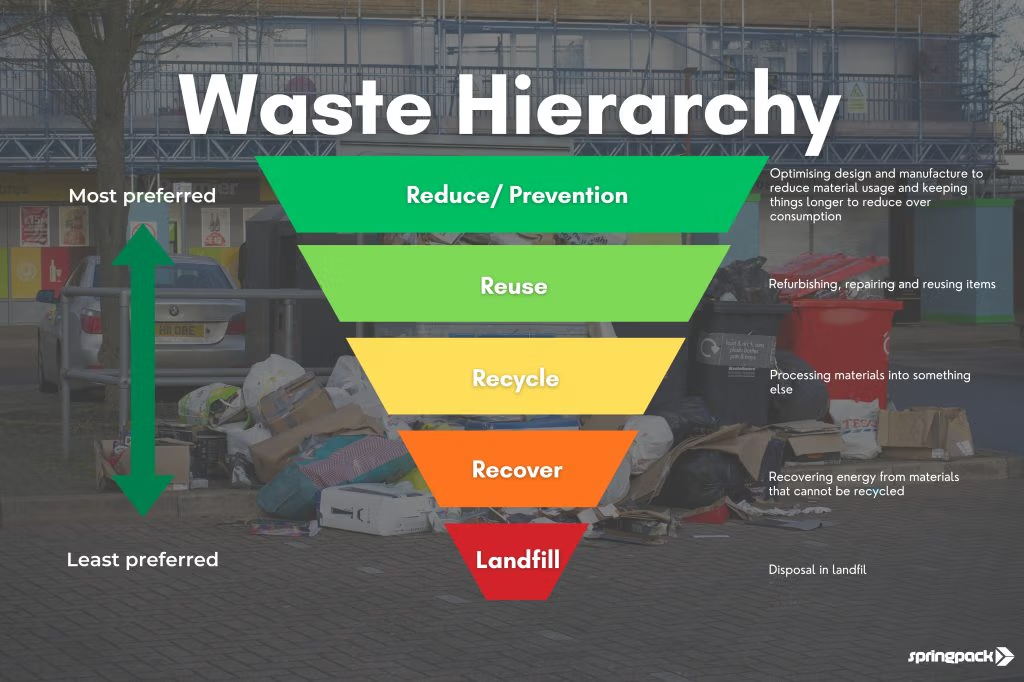
These principles align closely with the waste hierarchy, which places preventing waste above recycling.
Which Businesses Are Affected?
Whether EPR applies depends on several factors, including your annual turnover and the amount of packaging your business supplies.
Businesses may have different obligations depending on whether they are classed as a small producer or a large producer. In general, organisations that manufacture packaged goods, import packaged products into the UK, fill packaging, own branded products or supply empty packaging may all have responsibilities under the regulations.
Even businesses that are not required to pay Extended Producer Responsibility fees may still need to collect information and complete regulatory reporting if they meet certain thresholds.
Because the rules vary depending on business activity, it is important to review the latest Government guidance to understand your specific obligations.
What Does EPR Mean for Packaging?
One of the biggest changes introduced by packaging EPR is that packaging decisions are no longer based solely on cost and product protection.
Businesses are increasingly considering whether their packaging supports resource efficiency, whether it is easy to recycle and whether it contains unnecessary materials that could increase future costs.
For example, organisations may review whether plastic packaging can be reduced, whether mixed material packaging can easily be separated, or if there is an existing infastructure for the materials used to be recycled.
This is one reason why more businesses are carrying out packaging reviews. A review can identify opportunities to improve recyclability, simplify packaging formats and prepare for future environmental compliance requirements.
How Does EPR Support the Circular Economy?
Extended producer responsibility encourages businesses to think more carefully about how packaging is designed, used and recovered after use. The goal of EPR isn’t to eliminate packaging, but to ensure it’s causing the least harm to our planet, by working to keep materials in use for as long as possible through better design, reuse and recycling.
Improving design for recycling, increasing recycled content, reducing unnecessary packaging and considering the full extended lifecycle of products all contribute towards this objective.
What Should I Do Now?
For many organisations, the best starting point is understanding the packaging they currently place on the market.
Reviewing packaging materials, collecting accurate packaging data and speaking with suppliers can help businesses prepare for current and future EPR compliance requirements.
This is also an opportunity to assess whether packaging could be improved through better material selection, improved recyclability, increased resource efficiency or more sustainable design.
Preparing early can make future compliance reporting and environmental reporting much easier while supporting wider ESG and sustainability objectives.
Extended Producer Responsibility represents one of the biggest changes to UK packaging waste regulations in recent years. While it introduces new responsibilities for many businesses, it also encourages organisations to take a broader view of packaging performance.
By understanding the principles behind EPR and reviewing packaging with the full packaging lifecycle in mind, businesses can improve resource efficiency, support the circular economy and prepare for evolving UK packaging legislation.
Rather than seeing EPR as simply another compliance requirement, businesses can use it as an opportunity to build a more sustainable and resilient packaging strategy for the future.
Frequently Asked Questions
What is Extended Producer Responsibility (EPR)?
Extended Producer Responsibility is a UK policy that makes producers financially responsible for managing the packaging waste generated by the packaging they place on the market.
Who needs to comply with packaging EPR?
Businesses that manufacture, import, fill or supply packaged goods may have obligations depending on their size and the amount of packaging they handle. The rules on EPR are constantly changing; we recommend checking the Government Website.
What is the purpose of Extended Producer Responsibility?
The aim is to encourage better packaging design, improve recyclability, reduce waste and support a more circular economy.
What is the difference between a small producer and a large producer?
The classification depends on factors such as annual turnover and the amount of packaging supplied. Different reporting obligations apply to each category.
How can businesses prepare for EPR compliance?
Businesses should review their packaging, understand the materials they use, collect accurate packaging data and ensure they understand the latest Government guidance.
If you are interested in Packaging, Springpack are experts in the field. Our team of Packaging Experts have all of the answers to your packaging questions. Why not get in touch with us today?