 Plastic Free July


If you would like to learn more about Springpack and our services, use the form below to submit an enquiry, or get in touch with one of our packaging experts by…
Net Zero Week
Net Zero Week
Packaging changes that offer carbon savings
For many organisations, reducing packaging-related emissions is one of the most practical ways to support wider sustainability objectives. Packaging influences material consumption, transport efficiency, product protection and waste generation, all of which contribute to a product’s environmental impact across its lifecycle.
Making meaningful progress does not always require major investment. Reviewing packaging specifications, eliminating unnecessary materials and selecting products designed for recycling can often deliver measurable improvements while maintaining product protection and operational efficiency.
Whether your organisation is developing a sustainability strategy or looking for practical improvements during Net Zero Week, these ten packaging changes can help reduce environmental impact without compromising performance.
Why packaging matters for net zero
Packaging contributes to a product’s overall environmental impact through raw material extraction, manufacturing, transport, use and end-of-life management. Choosing the right packaging can reduce material use, improve transport efficiency, increase recyclability and minimise waste.
Resource efficiency as an important part of achieving the UK’s net zero ambitions, with measures such as reducing packaging weight, increasing recycled content and using materials more efficiently contributing to lower greenhouse gas emissions.
Reduce unnecessary packaging
The simplest improvement is often using less material by optimising your packaging.
Review every layer of your packaging and ask whether it has a protective or operational function. If it doesn’t, or could be replaced by a better solution, it’s time to review.
Examples include:
Removing unnecessary void fill
Reducing oversized cartons
Eliminating duplicate protective layers
Using shorter lengths of packaging tape where appropriate
Using less packaging generally means purchasing fewer materials, reducing transport weight and creating less waste for customers to manage.
.
Choose sustainable packaging materials
Selecting more sustainable materials should focus on suitability rather than replacing one material with another simply because it appears greener.
Consider:
Paper void fill
Recyclable paper mailing products
Packaging manufactured with responsibly sourced fibre
Products containing appropriate levels of recycled content
Every packaging application is different. The most sustainable solution is one that protects products effectively while minimising material use and supporting recycling.
Springpack’s range of paper packaging, corrugated products and protective packaging can help businesses match materials to their operational requirements. Springpack is FSC® C168911 certified.
Right-size every shipment
Shipping using an oversized box is rarely efficient.
Oversized packaging increases:
Vehicle space requirements
Void fill usage
Warehouse storage requirements
Distribution costs
Reviewing carton dimensions and selecting appropriately sized boxes improves cube utilisation throughout the supply chain.
Better load efficiency also means more products can often be transported in fewer vehicle movements.

Improve pallet stability
Damaged products often have a higher environmental impact than the packaging used to protect them.
Effective pallet wrapping reduces:
Product losses
Returns
Replacement shipments
Additional handling
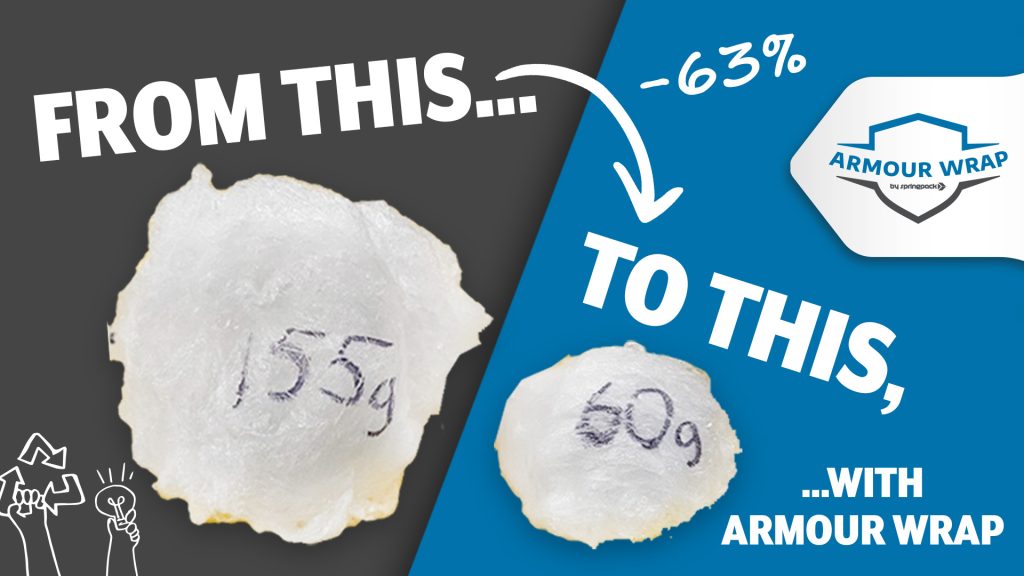
Modern pallet wrapping solutions, such as Armour Wrap, are designed to offer the same or improved load containment. They do this whilst using less material than older film specifications when correctly applied.
Choosing the right pallet wrap should always balance material reduction with transport protection.
Reduce product damage
Replacing damaged goods creates additional emissions through:
Manufacturing replacement products
Additional transport
Additional packaging
Waste disposal
Packaging should never be reduced to the point where product protection is compromised.
A packaging review balances material reduction with transit performance.
Design packaging for recycling
Good design for recycling begins during specification rather than disposal.
Simple design choices can improve recyclability, including:
Avoiding unnecessary mixed materials
Ensuring different packaging components can be easily separated
Selecting widely recyclable materials where practical
These principles support a more circular economy by helping valuable materials remain in use for longer.

Understand your packaging lifecycle
Looking at the complete packaging lifecycle often reveals opportunities that individual departments overlook.
Consider:
Material sourcing
Manufacturing
Storage
Packing operations
Transport
Customer use
Recycling or material recovery
Taking this broader view helps businesses make informed packaging decisions rather than focusing solely on purchase price.

Small changes often deliver the biggest improvements
Reducing the environmental impact of packaging does not always require wholesale redesign.
Many organisations achieve meaningful improvements by reviewing existing specifications, removing unnecessary materials and selecting packaging that performs efficiently throughout its lifecycle.
The most effective net zero packaging strategies combine product protection, operational efficiency and responsible material selection. Rather than focusing on a single change, businesses that regularly assess their packaging systems are often best placed to reduce waste, improve resource efficiency and support long-term sustainability objectives.
For organisations beginning this journey, working with an experienced packaging supplier can help identify practical opportunities that align environmental goals with day-to-day operational requirements.
Frequently Asked Questions
What is net zero packaging?
Net zero packaging refers to packaging strategies that help reduce greenhouse gas emissions across the packaging lifecycle through efficient design, appropriate material selection, improved recyclability and reduced waste. It focuses on lowering environmental impact rather than relying on a single material or product.
How can packaging reduce carbon emissions?
Packaging can help reduce emissions by using fewer materials, improving transport efficiency, preventing product damage, increasing recyclability and selecting materials with appropriate recycled content where suitable.
Does lighter packaging always have a lower carbon footprint?
Not necessarily. Lightweight packaging can reduce transport emissions and material use, but it must still provide adequate product protection. If products become damaged during transit, the overall environmental impact may increase.
What role does design for recycling play?
Designing packaging for recycling makes it easier for materials to be collected, sorted and reprocessed into new products. This supports resource efficiency and contributes to a more circular economy.
Is sustainable packaging always paper-based?
No. The most appropriate material depends on the application. Paper, plastic, corrugated board and other materials can all have a role where they provide the required protection, are used efficiently and are managed appropriately at the end of their life.
If you are interested in Packaging, Springpack are experts in the field. Our team of Packaging Experts have all of the answers to your packaging questions. Why not get in touch with us today?